Water Freedom System: the atmospheric water generation guide
A step-by-step DIY blueprint that shows you how to build a small machine that pulls moisture out of the air and turns it into water you can collect at home.
The air around you is never really empty. Even on a dry-feeling day it carries water vapor, and an atmospheric water generator (AWG) is simply a device that cools air until that vapor condenses into drops. This guide explains the principle in plain language and gives you a practical plan for building your own compact unit.
Digital guide. Covered by a money-back guarantee, with terms shown on the official order page.
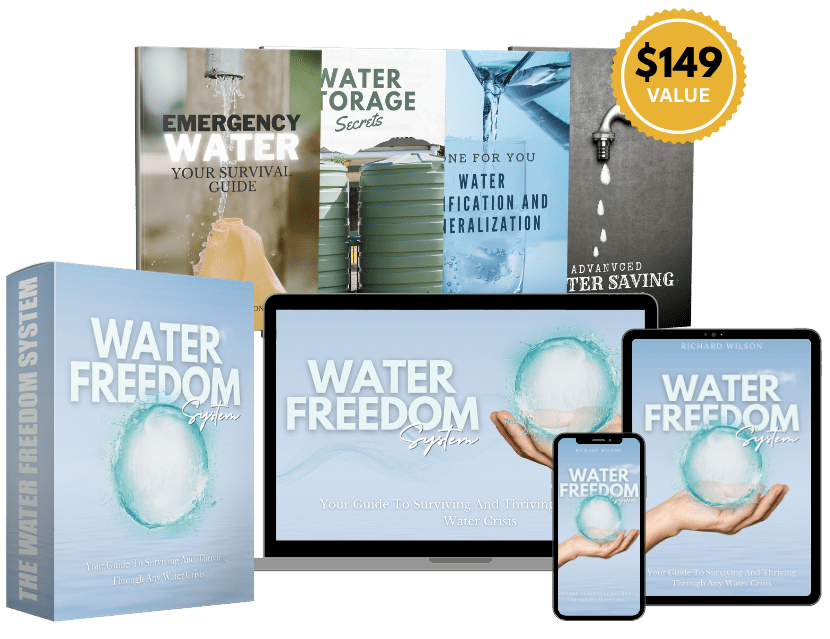
What is the Water Freedom System?
The Water Freedom System is a DIY guide to atmospheric water generation. It teaches you how to assemble a small air-to-water machine that cools humid air below its dew point so the water vapor condenses and drips into a collection container. It is a digital blueprint, not a finished appliance.
Most people never think about where their water comes from until something interrupts it: a storm that damages a pipe, a boil-water notice, a drought restriction, a rental cabin with an unreliable well, or a long trip far from the grid. The Water Freedom System was written for exactly that kind of moment. It is built around one simple idea. If you understand how condensation works, you can build a device that makes water from the humidity that is already around you.
The guide is attributed to Chris Burns and is presented as a practical, beginner-friendly project. It focuses on a compact build rather than an industrial installation. That means the parts are meant to be obtainable, the steps are written in order, and the explanations assume you are curious and willing to follow instructions, not that you hold an engineering degree.
On this page you will find a plain-English explanation of the science, a description of what the guide covers, honest notes about the limits of any atmospheric water generator, a look at the pricing and guarantee, and answers to the questions people ask most often before they decide whether the guide is right for them.
Why water independence matters
Reliable water is one of those things we take for granted until it is gone. A household can go without electricity for a day and cope. Going without drinking water is a very different kind of problem, and it escalates quickly. That is why emergency planners, campers, boaters and homesteaders all talk about water first when they talk about preparedness.
Traditional water sources each have a weakness. Municipal supplies depend on pumps, treatment plants and miles of pipe. Private wells depend on power and on the water table. Rain catchment depends on the weather. Bottled water is convenient but heavy, expensive over time and finite. A single source is a single point of failure, which is why many people like to add a second or third option.
Atmospheric water generation is interesting as one of those additional options because the raw material is the air itself. Humidity exists in nearly every inhabited region of the world, in varying amounts. You do not need a river, a well or a roof. You need a way to cool air and a way to collect what condenses.
A backup source
Water from air is not meant to replace everything else. It is a supplementary source that can add resilience when your usual supply is limited or interrupted.
Useful off the grid
Cabins, workshops, campers and remote properties often have no easy water hookup. A small AWG gives you one more way to gather water on site.
A hands-on skill
Building the device teaches you how condensation, airflow and cooling work together. That knowledge stays useful long after the project is done.
How atmospheric water generation works
You have already seen an atmospheric water generator work, even if you did not call it that. When a cold glass of water sits on a warm day, droplets appear on the outside. The glass did not leak. The air touching its cold surface cooled down, could no longer hold all of its vapor, and released some of it as liquid. That temperature at which the air gives up its vapor is called the dew point.
An AWG repeats that effect on purpose and at a larger scale. A fan draws air across a surface that is colder than the dew point of that air. Water condenses on the cold surface, runs downward and drips into a reservoir. The drier air then leaves the machine, and fresh humid air takes its place.
The guide explains each of these parts in everyday language so that you understand not only what to build but why each piece is there.

The four working parts of a simple AWG
Air intake and fan
A fan moves a steady stream of air through the machine. More air passing over the cold surface means more chances for water to condense, so airflow is one of the main levers on output.
Cooling surface
This is the part that gets colder than the dew point. In compact builds it is usually a cooled plate or a set of fins. Its temperature, size and cleanliness all affect how much water it produces.
Collection channel
Condensed water has to go somewhere. A sloped surface and a drip path guide the droplets into a container so they are not lost back into the airflow.
Reservoir and filtration
The collected water is stored in a clean container. Because condensate can pick up dust and particles from the air, filtration and clean storage are an important part of responsible use.
Why humidity and temperature matter so much
Relative humidity tells you how close the air is to being saturated. The higher it is, the less cooling you need before condensation begins, and the more water each cubic meter of air can give up. Warm, humid conditions are the best case for an AWG. Cool, dry conditions are the hardest. Any honest description of this technology has to say so, and the guide does. Knowing your local conditions lets you set realistic expectations and choose the best time of day and place to run the machine.
Energy is the other half of the story. Cooling air takes power, and the amount of water you collect per unit of energy depends on the design and on the weather. The guide discusses the trade-offs between simple cooling methods so you can choose a build that suits the power you have available.
What is inside the Water Freedom System guide
The guide is organised so that you can read it once from start to finish, then keep it beside you while you build. It moves from understanding to materials to assembly to everyday use. Here is what you can expect it to cover.
The science, simplified
Dew point, humidity, condensation and heat transfer explained without jargon, so every later step makes sense.
A materials overview
The components a compact AWG needs, what each one does, and how to think about choosing sensible versions of them.
Step-by-step assembly
An ordered build plan that takes you from loose parts to a working machine, with attention to the details that commonly go wrong.
Airflow and layout
How to arrange the intake, cooling surface and drip path so that air flows the way it should and condensate is captured.
Collection and storage
Guidance on getting water out of the machine and into a clean container, and on keeping that container in good condition.
Troubleshooting
Plain advice on what to check if output is lower than you hoped, from airflow blockages to weather conditions.
Written for real homes, not laboratories
A lot of technical writing assumes you have a workshop full of specialised tools. This guide is aimed at ordinary households. Instructions are written as clear steps. Terms are defined the first time they appear. Where a choice has to be made, the guide explains the options in terms of cost, power use and difficulty rather than leaving you to guess.
- Clear, sequential instructions you can follow at your own pace
- Explanations of the reason behind each step, not only the step itself
- Guidance on setting realistic expectations for output in your climate
- Notes on cleanliness, filtration and storage of the water you collect
- Instant digital access, so you can start reading right after ordering
Who the guide is for
The Water Freedom System suits a broad group of people who share one thing: they would like to understand and control more of their own water supply. A few common examples follow.
Preparedness-minded households
If you already keep stored water, a first aid kit and spare supplies, an AWG project adds another layer to your plan and teaches you a skill while you build it.
Off-grid and cabin owners
Properties without a reliable water connection benefit from every extra source. A compact unit can supplement rain catchment or hauled water.
DIY builders and hobbyists
If you enjoy projects that combine mechanics, airflow and a little physics, this is a satisfying build with a tangible result at the end.
Gardeners and homesteaders
People who manage land often think about water constantly. Understanding atmospheric water gives you another tool to consider alongside barrels, tanks and irrigation.
Travelers and van lifers
Anyone living or travelling away from fixed infrastructure may want to learn how water can be gathered from the surrounding air.
Curious learners
Students, teachers and parents looking for a clear, real-world demonstration of condensation will find the explanations easy to share.
Getting started in five steps
You do not need to decide everything today. Here is how most people move from curiosity to a working machine.
- Order and downloadPlace your order through the secure checkout and receive instant digital access to the guide.
- Read the overview firstSpend an evening with the science sections. Once dew point and airflow make sense, the build steps feel much more natural.
- Check your local conditionsLook at typical humidity and temperature where you live so you know what output to expect and when your machine will work best.
- Gather parts and buildFollow the assembly instructions in order. Take your time with the airflow path and the drip channel, because these are the details that matter most.
- Collect, filter and storeRun the unit, collect the water, filter it as the guide recommends and keep it in clean, covered containers.
Humidity and climate: what to expect
No atmospheric water generator performs the same everywhere. Output rises and falls with the moisture in the air, and a fair guide must tell you that. The table below describes the general relationship between conditions and performance. It is meant to help you plan, not to promise a specific volume.
| Conditions | Typical effect on output | What helps |
|---|---|---|
| Warm and humid (coastal, tropical, humid summer) | Best case. Air holds a lot of vapor and condenses readily. | Steady airflow and a clean cooling surface |
| Mild and moderately humid | Reasonable output, especially overnight or in the early morning when humidity rises. | Running the unit during higher-humidity hours |
| Cool and damp | Moderate output. Air is humid but less vapor is available at low temperatures. | Good insulation and unrestricted air intake |
| Hot and dry (desert, arid regions) | Lowest output. There is little vapor to collect. | Running during the most humid part of the day and treating the AWG as a supplement |
| Very cold and dry | Poor output. Cold air carries very little moisture. | Using the machine indoors where air is warmer and more humid |
The practical lesson is simple. If you live somewhere humid, an AWG can be a meaningful extra source. If you live somewhere dry, it is still a fascinating project, but you should plan on it being a supplement and keep your other water sources in place.
Using the time of day to your advantage
Relative humidity usually climbs as the air cools overnight and peaks around dawn. Many people find that running a machine during those hours gives better results than running it in the heat of the afternoon, when the air is at its driest. The guide encourages you to observe your own local pattern over a few days and adjust your schedule to match.
Water quality and safe use
Water that condenses out of the air starts out as relatively pure moisture, but it travels through your machine and your containers before you use it. Anything that touches the water can affect its quality. For that reason, cleanliness is not an optional extra. It is part of the design.
- Keep surfaces clean. Dust, pollen and residue can settle on a cooling surface and end up in the water. Regular cleaning is a core habit.
- Choose suitable materials. Components that touch your water should be appropriate for contact with water you may drink.
- Filter and treat. The guide discusses filtration and treatment approaches so that you can make an informed decision about how to handle your water before use.
- Store carefully. Use clean, covered containers and avoid leaving water standing for long periods in warm places.
- Mind the electrics. Any project that combines power and water deserves careful wiring and sensible placement. Follow safe practices and local requirements.
If you intend to drink water from a homemade device, you are responsible for deciding whether it is suitable for you. Consider testing it with a reputable water-testing service, and follow the advice of local authorities and qualified professionals. The Water Freedom System is an educational and instructional guide. It is not medical advice, and it does not claim to replace professional testing or the regulations that apply where you live.
How atmospheric water compares with other sources
Most people end up using more than one water source. Here is how an AWG fits next to the usual alternatives.
| Source | Strengths | Limits |
|---|---|---|
| Atmospheric water generator | Needs no well, roof or pipe. Works wherever there is humidity. A rewarding build. | Output depends on humidity and temperature. Needs power and regular cleaning. |
| Rain catchment | Simple and low cost when it rains. Good for gardens. | Depends entirely on rainfall. Needs a roof and storage. |
| Private well | Large, steady supply in many places. | Expensive to drill. Needs a pump and electricity. Depends on the water table. |
| Bottled water | Convenient and ready to use. | Costly over time, heavy to move and finite. |
| Municipal supply | Treated, tested and always on in normal conditions. | Vulnerable to outages, restrictions and notices. |
The aim of the Water Freedom System is not to talk you out of any of these. It is to add one more skill and one more option to the list, so that a problem with one source does not leave you without water.
Pricing and what you receive
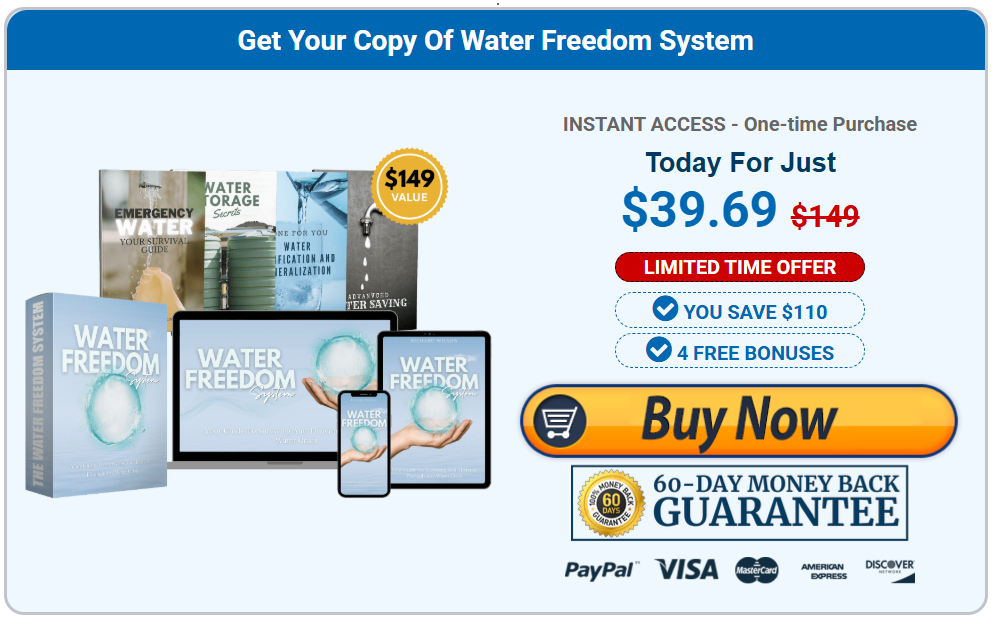
The Water Freedom System is sold as a digital package, which means there is nothing to wait for in the mail. After you complete your order you receive access to the guide and can begin reading straight away.
Current pricing and any included bonus material are shown on the pricing card and on the official order page. Because offers can change, the order page is always the final word on the exact price, package contents and terms at the time you buy.
- Instant digital access after checkout
- The full atmospheric water generation guide
- Clear explanations and ordered build steps
- Covered by a money-back guarantee
What customers are saying
People who pick up a guide like this usually tell us the same few things. They appreciate that the science is explained simply. They like having a single, organised plan instead of scattered forum posts. And they enjoy the feeling of building something that does a genuinely useful job.
The image alongside shows customer feedback gathered for the Water Freedom System. As with any product, individual experiences differ. Results depend on your local climate, the parts you use, how carefully you build and how you maintain the machine.

Money-back guarantee
Trying something new should not feel risky. The Water Freedom System is backed by a money-back guarantee, so you can read the guide, explore the explanations and decide with confidence whether it is for you.
The length of the guarantee period and the steps for requesting a refund are set out on the official order page. We recommend reading them before you buy so you know exactly how the process works. If the guide does not suit you, you can follow the stated process to ask for your money back.
A simple, secure checkout
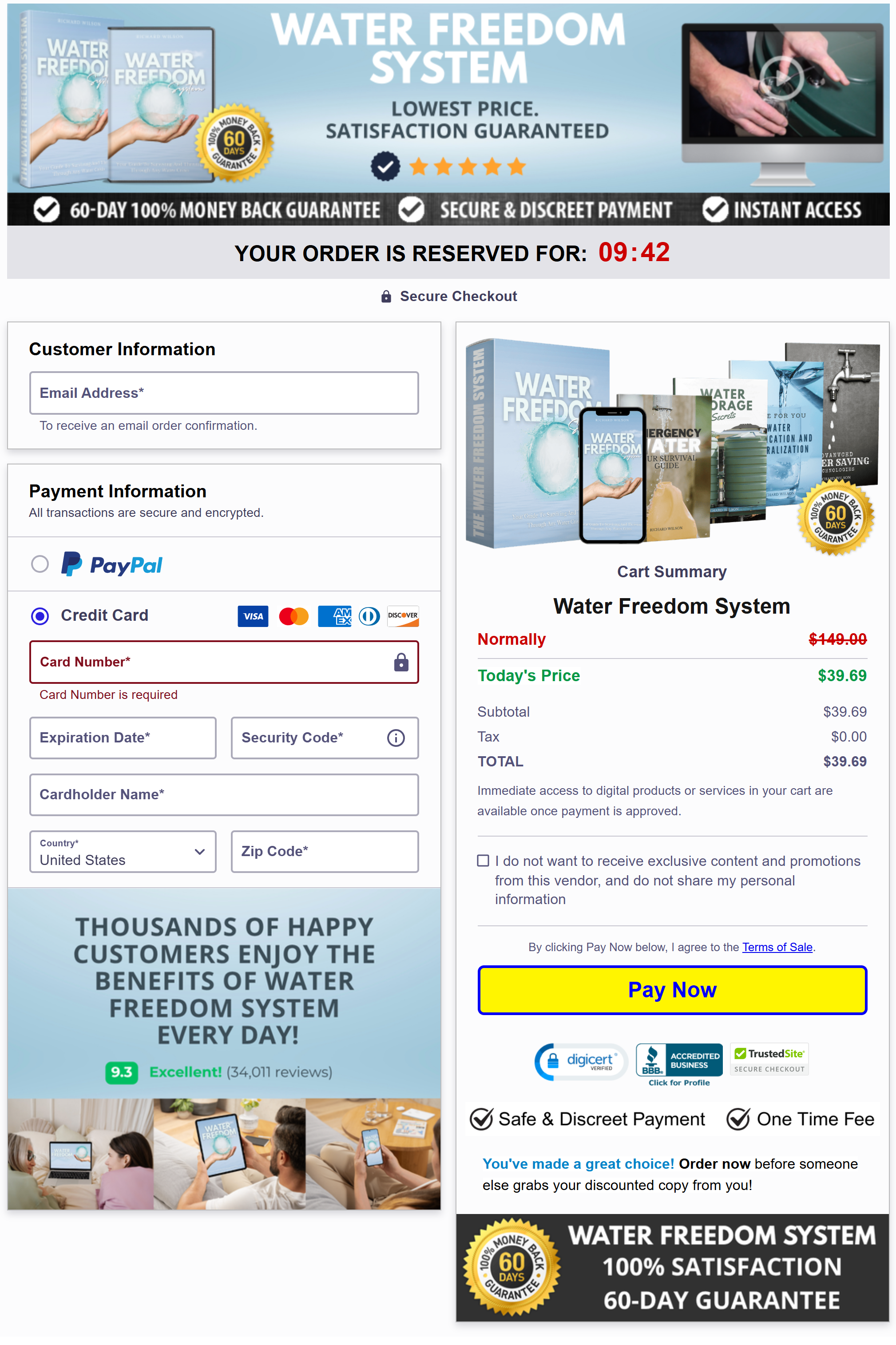
Ordering takes only a few minutes. You choose your package, enter your details on the secure checkout page and receive access to the digital guide. There is no shipping to wait for and no physical product to track.
The checkout screen is shown here so you know what to expect before you click. It is the same page you will see when you order. Check the details of your package, complete your payment information and you are ready to start reading.
Setting honest expectations
We would rather you buy with clear eyes than with inflated hopes. A small homemade atmospheric water generator is a modest machine. It will not fill a swimming pool, and it will not match the output of a well or a municipal pipe. What it can do is collect water from the air in a way that is educational, practical and, in the right climate, genuinely useful as a supplement.
What the guide can do for you
- Explain the principle behind condensing water from air in plain language
- Give you an organised plan to build a compact unit
- Help you understand why output changes with weather and how to work with it
- Encourage clean, careful handling of the water you collect
What it will not do
- Guarantee a particular daily volume of water in every climate
- Replace professional water testing or local regulations
- Remove the need for other water sources in an emergency plan
Think of the Water Freedom System as a way to gain knowledge, a working project and one more resilient habit. That framing keeps everyone happy and keeps the project fun.
Frequently asked questions
What is an atmospheric water generator?
An atmospheric water generator, or AWG, is a device that collects water from the humidity in the air. It cools air below its dew point so that water vapor condenses into liquid, which then drips into a container. The same effect makes droplets appear on a cold glass on a warm day.
What is the Water Freedom System?
The Water Freedom System is a DIY guide that teaches you how to build a small atmospheric water generator at home. It explains the science in plain language and provides an ordered plan for assembling and using a compact unit.
Is the Water Freedom System a physical product?
No. It is a digital guide that you access online after ordering. There is nothing to ship, and you can start reading straight away. You build the machine yourself using parts you gather by following the guide.
How much water can I expect to collect?
It depends on your local humidity and temperature, the design you build and how well it is maintained. Warm, humid climates generally give the best results and hot, dry or very cold climates the lowest. The guide helps you understand these factors, but no specific volume is guaranteed.
Does it work in dry climates?
An AWG can work in dry climates, but output is lower because there is less vapor in the air. In those places it is best treated as a supplement to other sources, and it often performs better during the more humid hours of the night and early morning.
Do I need special skills or experience to follow the guide?
No engineering background is required. The guide is written for ordinary households, with defined terms and ordered steps. Basic comfort with simple hand tools and following instructions is helpful, and care is needed with anything electrical.
Is the water safe to drink?
Water quality depends on the materials you use, how clean the machine is and how you filter and store the water. The guide covers cleanliness, filtration and storage, but you are responsible for deciding whether the water is suitable for you. Consider independent water testing and follow local guidance. The guide is not medical advice.
Does the machine need electricity?
Cooling air to its dew point takes energy, so a compact AWG generally needs a power source. The guide discusses how different approaches trade off power use, cost and output so you can choose one that fits your situation.
How is the guide delivered?
It is delivered digitally. After you complete the secure checkout you receive access to the guide, so you can begin reading right away without waiting for shipping.
Is there a money-back guarantee?
Yes. The Water Freedom System is covered by a money-back guarantee. The exact period and the refund steps are shown on the official order page, so please read them before you buy.
Can I use the machine indoors?
Many people run compact units indoors, where the air is often warmer and more humid than outside in cold or dry seasons. Make sure there is good airflow, a stable surface and safe placement away from anything that could be damaged by moisture.
Where do I order the Water Freedom System?
Use any of the order buttons on this page. They take you to the official secure checkout, where you can see current pricing, package details and guarantee terms before you complete your purchase.
Learn to make water from the air around you
Get the Water Freedom System, read the science in plain language and follow a clear plan for building your own compact atmospheric water generator. It arrives instantly, and it is covered by a money-back guarantee.